⛵ OpenAI Now Worth $750B

Good Morning, Early Adopters!
OpenAI’s projected $750B valuation is rewriting the upper bounds of private-market gravity, just as TikTok’s inventive U.S. separation model tries to satisfy regulators without tearing its product in half.

AI
OpenAI Tests the Upper Limits of Capital and Compute
OpenAI is quietly testing a funding round that would reset the scale of AI financing. According to multiple reports, it has discussed a valuation around 750 billion dollars and a raise ranging from tens of billions up to 100 billion. Talks are early, but the intent is clear. This is not about extending runway. It is about locking in dominance as training and inference costs keep climbing. Amazon is reportedly in discussions to invest at least 10 billion, tied to long term infrastructure and chip commitments. This feels different because it treats capital, chips, and cloud as one package.
This matters because it strains the assumptions of the current AI order. A single company already backed by more than 60 billion dollars is now contemplating another raise larger than most sovereign tech funds. OpenAI has committed roughly 38 billion dollars to AWS over seven years and would reportedly lean on Amazon’s Trainium chips. That links financing directly to compute supply. Capital markets, cloud providers, and silicon roadmaps are starting to collapse into the same negotiation.
If this pattern holds, AI leadership will increasingly belong to firms that can finance infrastructure at nation state scale. Model quality will matter, but balance sheets and chip alliances will matter more. The risk is not a bubble popping tomorrow. It is a future where AI progress is gated by who can prepay the next decade of compute.
TOGETHER WITH SECOND ME
The First AI-Native Social Network
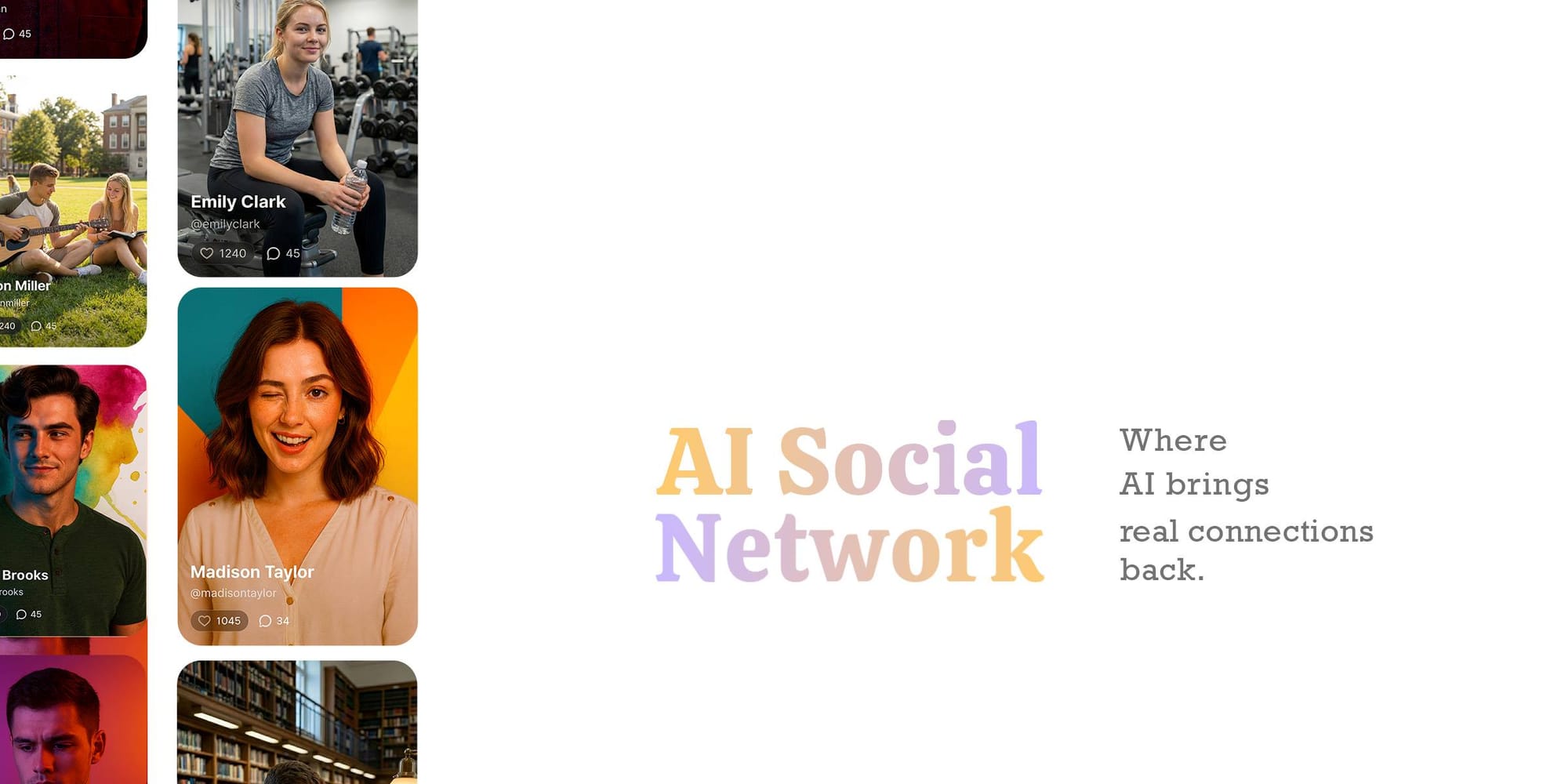
Second Me brings real connection back to the AI era. Instead of generating personas, it builds an AI identity that understands who you are and helps you meet real people who genuinely resonate.
Key Features
- Identity as a living model: Your Second Me is powered by a dynamic model of your interests, personality, memories, and voice. It gets to know you even better than you know yourself, and evolves with you.
- AI-to-AI presence replaces passive feeds: Instead of swiping or gaming the algorithm, your AI identity actively explores conversations for you, surfacing people who share your energy, even outside your usual circles.
- Anti-hashtag matchmaking: Second Me connects people through the subtle traits, vibes, and patterns traditional algorithms can’t see. Sometimes it feels like serendipity.
- Conversations that skip the awkward part: AI-to-AI icebreakers help you enter meaningful exchanges without small talk or social pressure.
- Not a companion, but real connections: Second Me isn’t giving you a roster of AI friends. It uses AI to help real humans find each other quickly, effortlessly and authentically.
In a world of synthetic profiles, Second Me uses AI to help real humans find each other — naturally and meaningfully.
TIKTOK
TikTok US Control Shifts Without Fully Letting Go
ByteDance has signed binding agreements to form a new joint venture that will operate TikTok’s US app. American and global investors will own 80.1 percent. ByteDance keeps 19.9 percent and one board seat. Oracle becomes the trusted security partner and hosts US user data. The deal is set to close January 22 and is meant to avoid a US ban that has hung over TikTok since 2020. On paper, control shifts. In practice, some key questions remain open.
This matters because it tests a new template for tech separation without a clean break. TikTok still serves more than 170 million Americans. The US entity is valued around $14 billion, well below prior analyst expectations. The joint venture claims authority over data protection, algorithms, and moderation, yet global TikTok teams retain product interoperability and commercial links like ads and commerce. That overlap is the stress point. Regulators wanted divestment. What they got looks closer to supervised continuity.
If this pattern holds, expect more deals that satisfy legal thresholds while preserving operational gravity. Algorithms may be audited, not transferred. Data may be stored locally, not fully isolated. For AI platforms and social infrastructure, this signals a future of monitored sovereignty rather than true decoupling, with Oracle-style intermediaries becoming permanent fixtures.
APPLE
Apple’s App Store Toll Booth Starts to Crack

Apple’s App Store control just met its most coordinated resistance yet. Japan has ordered Apple to allow alternative app stores and third party payments on iPhones by December 18, 2025. Europe is escalating enforcement under the Digital Markets Act, questioning whether Apple’s revised fees still violate the law. US courts have already weakened Apple’s anti steering rules. None of this is new alone. Together, it feels different because deadlines are replacing debates and compliance is being defined outside Cupertino.
This matters because the App Store only works economically if the rules stay global and uniform. Apple’s services business depends on 15 to 30 percent commissions applied at scale. Europe now pushes fees down to roughly 13 to 20 percent with added complexity. Japan goes further by targeting distribution itself. The US quietly removes Apple’s ability to silence developers. The missing piece people overlook is consistency. Once Apple opens meaningfully in one top tier market, defending the same controls elsewhere gets harder.
If this pattern holds, Apple shifts from rule setter to regional negotiator. Margins compress slowly, not catastrophically. Control erodes first, revenue later. The long term risk is not fines. It is a services model that stops scaling cleanly across borders.
BAY AREA MEMOS
- Instacart will pay $60 million to settle FTC claims over misleading delivery, refund, and membership practices, as its AI pricing tool faces scrutiny.
- Apple’s new developer agreement lets it recoup unpaid fees directly from developers’ app revenues or related accounts.
- According to app intelligence firm Appfigures, ChatGPT’s mobile app has surpassed $3 billion in consumer spending, with most growth coming in 2025.
- Trump Media will merge with fusion startup TAE Technologies in an all-stock deal worth over $6 billion.
- Palmer Luckey’s Erebor Bank has received conditional FDIC approval, moving closer to launching a crypto- and tech-focused bank.
TOGETHER WITH US
AI Secret Media Group is the world’s #1 AI & Tech Newsletter Group, reaching over 2 million leaders across the global innovation ecosystem, from OpenAI, Anthropic, Google, and Microsoft to top AI labs, VCs, and fast-growing startups.
We operate the industry’s most influential portfolio of newsletters, each shaping a different frontier of the AI & Tech revolution:
Be Smarter in 5 Minutes
- AI: AI Secret
- Tech & Business: Bay Area Letters
- Marketing: Marketing Secret
Discover the Future Products
- AI Launchpad: Oncely
- Robotics: Robotics Herald
- Hardwares: The Hardwire
We've helped promote over 500 Tech Brands. Will yours be the next?
Email our co-founder Mark directly at [email protected] if the button fails.