⛵ McKinsey’s AI Reality Check

Good Morning, Early Adopters!
McKinsey’s latest AI report delivers a sober reminder that enterprise adoption is still more experiment than transformation.

AI
Most Companies Use AI But Few Capture Real Value
McKinsey & Company published its 2025 State of AI survey, and the headline is quieter than the hype cycle. Almost everyone is using AI now. Nearly nine in ten companies report regular use. AI agents are no longer theoretical either. Over sixty percent are experimenting, and about a quarter are trying to scale them somewhere. But most of this activity is still stuck in pilots. Only around one third of organizations say AI is actually scaled across the enterprise. This feels different because AI is no longer new, yet the outcomes still look small.
This exposes a widening gap between activity and impact. Sixty four percent say AI helps innovation. Many see cost savings in software, manufacturing, and IT. Revenue gains show up in marketing and product work. But only thirty nine percent see any EBIT impact at all, and most of that is under five percent. The missing piece is not models. It is workflows. The companies getting value are redesigning how work actually runs, not just adding tools.
Our take is that 2026 becomes a sorting year. The six percent of firms treating AI as a transformation engine will pull ahead. Everyone else will stay busy, spend money, and wonder why nothing moved. The risk is not AI failure. It is quiet stagnation while agents sit beside the business instead of inside it.
TOGETHER WITH HARDWIRE
The Future Just Got Physical
The Hardwire is a weekly newsletter tracking the next wave of AI-powered hardware: consumer devices, wearables, spatial computing, and the silicon shaping it all. From product launches to deep-tech inflection points, it connects what’s being built with why it matters.
Read by founders, engineers, investors, and operators who want to understand how AI escapes the cloud and enters the physical world.
If you care about where software meets atoms, The Hardwire is where the future gets wired.
ROBOTAXI
Autonomy Split Into Two Paths This Year
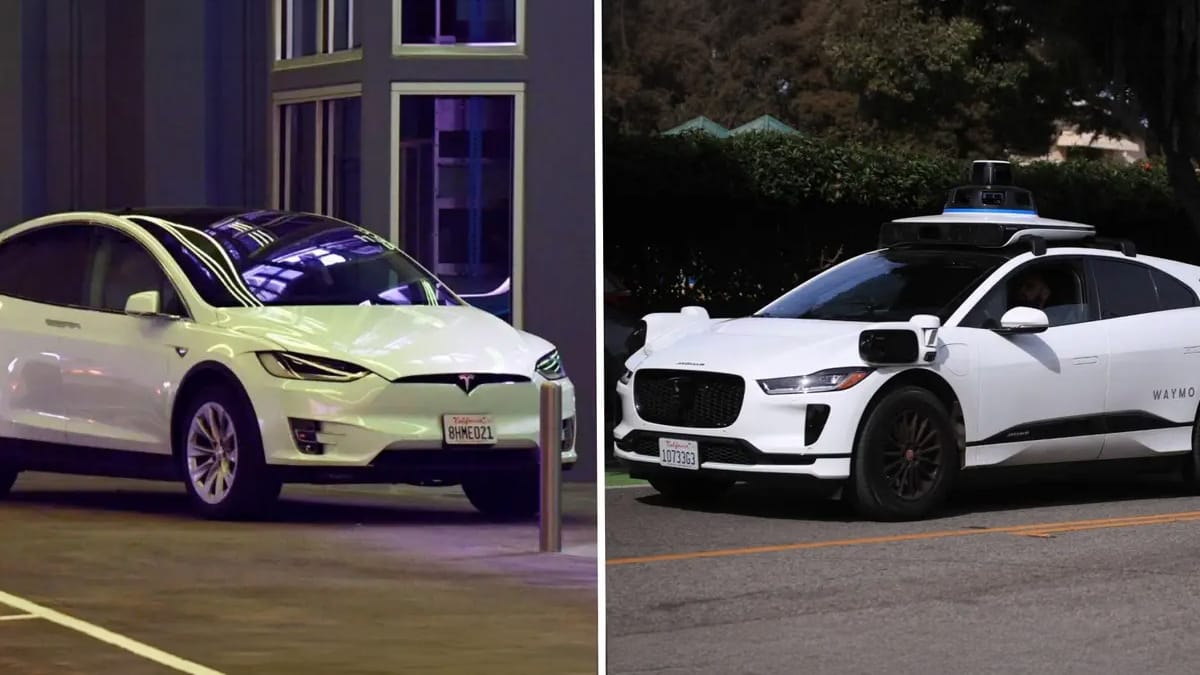
In 2025, autonomous driving stopped being theoretical. Waymo leaned fully into operations. It ran more than 14 million driverless trips, surpassed one million rides per month, and expanded freeway and airport access. The signal was not novelty but routine. Tesla took a different but equally consequential step. It began testing robotaxis on public roads without human supervision and aligned its Full Self Driving program explicitly around that end state.
This matters because the industry now has two validated approaches. Waymo shows what happens when autonomy is treated as regulated infrastructure. High utilization, defined service zones, and permit driven expansion create compounding trust. Tesla shows the power of scale and iteration. Millions of customer vehicles feed training data designed for full autonomy, not driver assist. The gap between supervised miles and unsupervised service is narrowing, even if the deployment models differ.
If this trajectory holds, autonomy does not converge into one winner. It stratifies. Fleet based systems become city utilities. Consumer based systems evolve into networked robotaxi platforms. The industry risk shifts from technology to execution speed and regulatory timing.
CRYPTO
Crypto Won The Year But Not The Rules Yet

In 2025, Washington stopped treating crypto like a suspect. Under Donald Trump, regulators dropped major lawsuits, loosened bank rules, approved new products, and passed the first federal law for dollar pegged tokens. Bitcoin hit new highs. Firms like Coinbase Global Inc and Binance caught their breath. This felt different because it reversed years of enforcement pressure almost overnight.
What most people miss is what did not happen. The core market structure bill stalled in the Senate. That bill decides whether tokens are securities or commodities. The industry spent over $245 million lobbying for it. Without it, everything rests on agency discretion at the U.S. Securities and Exchange Commission and coordination with the Commodity Futures Trading Commission. Guidance can change. Lawsuits can return. Executives at Solana Policy Institute and LMAX Group openly admit this is a fragile truce.
Our take is that 2026 becomes a waiting year. Firms will launch cautiously under temporary exemptions. Capital will flow, but with shorter time horizons. If Congress does not lock rules into law, US crypto remains reversible policy, not durable infrastructure.
BAY AREA MEMOS
- Klarna has partnered with Coinbase to raise short-term institutional funding denominated in USDC, adding stablecoins to its treasury and capital markets toolkit.
- Google is suing SerpApi for allegedly bypassing SearchGuard to scrape and resell search data under the DMCA.
- Starbucks launched a dedicated fashion and beauty marketing role to expand cultural collaborations and refresh its brand.
- Baidu plans to pilot its Apollo Go robotaxis in London in 2026 via partnerships with Uber and Lyft, as the UK accelerates autonomous vehicle trials.
- Cerebras Systems is reportedly reviving its IPO plans, targeting a public listing in early to mid-2026 as an alternative player to Nvidia in AI chips.
TOGETHER WITH US
AI Secret Media Group is the world’s #1 AI & Tech Newsletter Group, reaching over 2 million leaders across the global innovation ecosystem, from OpenAI, Anthropic, Google, and Microsoft to top AI labs, VCs, and fast-growing startups.
We operate the industry’s most influential portfolio of newsletters, each shaping a different frontier of the AI & Tech revolution:
Be Smarter in 5 Minutes
- AI: AI Secret
- Tech & Business: Bay Area Letters
- Marketing: Marketing Secret
Discover the Future Products
- AI Launchpad: Oncely
- Robotics: Robotics Herald
- Hardwares: The Hardwire
We've helped promote over 500 Tech Brands. Will yours be the next?
Email our co-founder Mark directly at [email protected] if the button fails.