⛵ Hard Limits Ahead

Good Morning, Early Adopters!
We thank you for your support. Growth now meets physical, financial, and geopolitical limits across AI and space. Enjoy the holidays and see you after Christmas.

MARKET
JPMorgan Sees 2026 Tech Gains Riding Heavier Infrastructure Bets
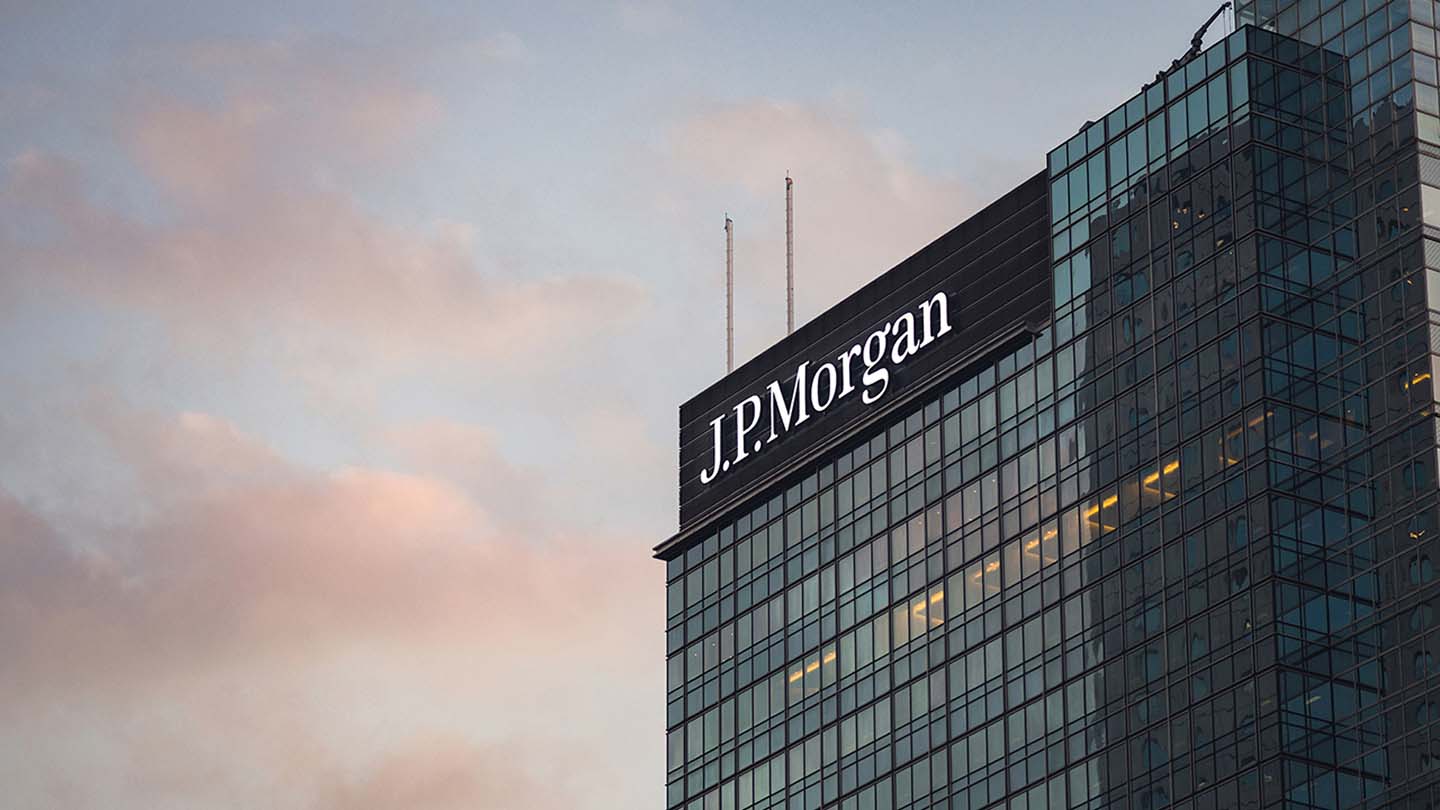
JPMorgan’s 2026 tech outlook starts from a simple observation. What looked like a fragile AI trade in early 2025 hardened into a system wide investment cycle. Tech was not just software and models anymore. It became data centers, power contracts, networking gear, cooling systems, and chips. By the end of 2025, that shift felt structural, not tactical. Going into 2026, JPMorgan expects technology markets to be driven less by novelty and more by execution at scale.
The pressure point is capital intensity. JPMorgan estimates US tech leaders could be spending around 500 billion dollars a year on AI related capex by 2026, more than triple 2023 levels. Data center and infrastructure investment globally could run into the five to seven trillion dollar range. That pulls tech returns closer to industrial economics. Power availability, grid upgrades, semiconductor supply, and financing costs start to matter as much as model performance or user growth. This quietly challenges the assumption that tech scales without friction.
The likely outcome is a more uneven tech market. Platforms and infrastructure owners with balance sheets and supply access keep compounding. Marginal players face higher costs and sharper volatility. Tech still leads, but it starts to behave less like pure growth and more like critical infrastructure, with all the risks that implies.
TOGETHER WITH ROBOTICS HERALD
Explore the Rise of Humanoid Intelligence

From factories to frontlines, humanoid robots are no longer prototypes — they’re becoming co-workers, caregivers, and companions. Robotics Herald tracks the breakthroughs shaping this transformation, offering deep insights into the companies, technologies, and people building our mechanical future.
AI
The Big Short Warns AI Growth Hits Physical Limits
Steve Eisman, the investor made famous by The Big Short, is now aiming his skepticism at AI going into 2026. On his podcast, he argued that the AI boom is running into two hard constraints. One is power. Data centers are being built faster than grids can support them, leaving some facilities physically unable to turn on. The other is intellectual. Eisman believes bigger language models are delivering weaker gains than before, raising doubts about the payoff from endless scaling.
The power problem stresses an assumption baked into most AI roadmaps. US electricity demand is growing around 3 percent a year, but new generation and transmission take two to three years to complete. Compute plans assume energy arrives on schedule. That is no longer guaranteed. On the model side, Eisman pointed to criticism that OpenAI’s latest releases did not feel meaningfully better than earlier versions. If scale stops working, chip demand and data center growth forecasts start to soften.
If this continues, AI investment tightens. Spending shifts from expansion to efficiency and measurable returns. That fits signals from JPMorgan Chase & Co. surveys showing CEOs pushing for ROI. The risk is not a crash. It is a slower cycle where power and diminishing returns cap ambition.
SPACE
Space Is No Longer Quiet Or Predictable Going Into 2026
In its year end review and outlook, Center for Strategic and International Studies frames space as a domain that has crossed a line. China demonstrated rapid launch tempo, complex rendezvous and proximity operations, and apparent on orbit servicing in geostationary orbit. Russia conducted repeated close approaches at distances under 100 meters. Commercial actors matched state level capabilities in launch and sensing. At the same time, initiatives like Golden Dome formally linked missile defense, space sensing, and deterrence. Space stopped being treated as a stable backdrop.
The implications ripple through how space has been organized for decades. Orbital behavior is no longer static. Satellites now maneuver, refuel, and alter signatures, complicating tracking and intent assessment. Low Earth orbit added more than 3,500 payloads in a single year, pushing the tracked catalog beyond 26,000 objects and driving thousands of close approaches under 200 meters. Commercial space situational awareness firms now surface behavior in near real time, eroding the buffer between classified military activity and public visibility.
Looking ahead, 2026 points toward normalization rather than shock. Counterspace capabilities will be discussed openly, funded deliberately, and integrated with commercial infrastructure. Defense acquisition will lean harder on private providers for sensing, launch, and data fusion. The primary risk is not a single dramatic event, but cumulative miscalculation in a crowded, maneuverable, and strategically contested orbit where advantage must be actively maintained.
BAY AREA MEMOS
- The FCC plans to restrict future foreign-made drones, including DJI and Autel, from the U.S. market on national security grounds.
- Alphabet is buying Intersect Power for $4.75 billion to secure clean energy and ease power bottlenecks for its AI data centers.
- Paramount renewed its all-cash bid for Warner Bros. Discovery, backed by a $40.4 billion personal guarantee from Larry Ellison to challenge Netflix’s deal.
- Italy fined Apple about $116 million after ruling its ATT privacy feature anticompetitive.
- Goodman Group struck a $9.3 billion deal with Canada’s CPPIB to build four data centre projects across Europe, expanding its AI infrastructure push.
TOGETHER WITH US
AI Secret Media Group is the world’s #1 AI & Tech Newsletter Group, reaching over 2 million leaders across the global innovation ecosystem, from OpenAI, Anthropic, Google, and Microsoft to top AI labs, VCs, and fast-growing startups.
We operate the industry’s most influential portfolio of newsletters, each shaping a different frontier of the AI & Tech revolution:
Be Smarter in 5 Minutes
- AI: AI Secret
- Tech & Business: Bay Area Letters
- Marketing: Marketing Secret
Discover the Future Products
- AI Launchpad: Oncely
- Robotics: Robotics Herald
- Hardwares: The Hardwire
We've helped promote over 500 Tech Brands. Will yours be the next?
Email our co-founder Mark directly at [email protected] if the button fails.